
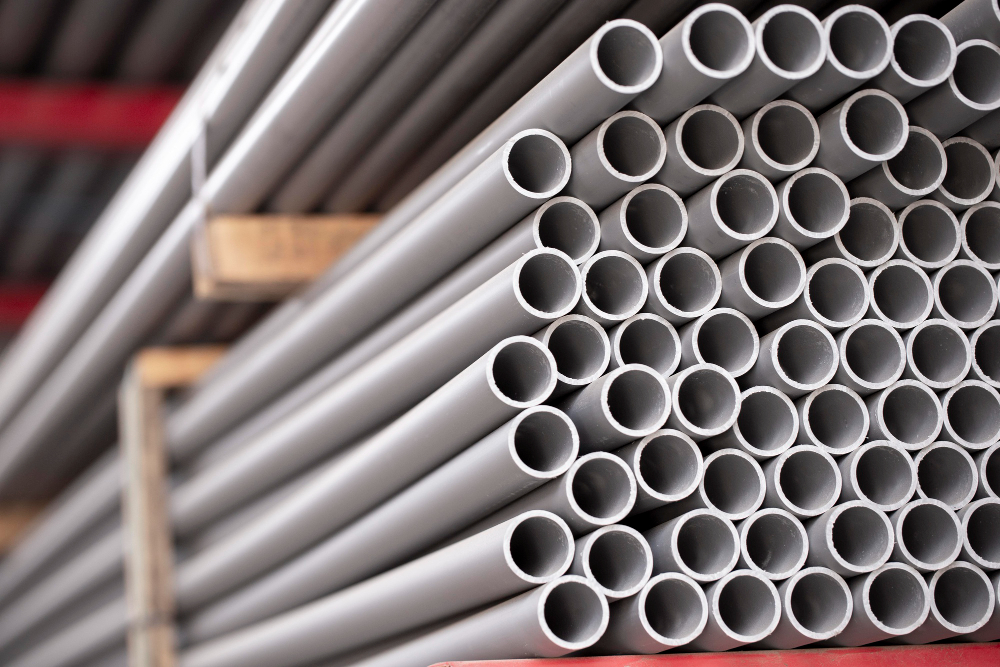
In fiber-optic and telecom infrastructure, selecting a PLB HDPE duct is not simply about choosing a diameter. The duct must match the cable, installation technique, route conditions, and long-term network requirements. An incorrect specification can lead to higher pulling resistance, installation difficulties, and unnecessary maintenance.
For project engineers, contractors, and procurement teams, choosing reliable PLB HDPE duct manufacturers such as Ashish Pipes, understanding PLB HDPE duct sizes and specifications is essential for building a dependable underground communication network.
What Should You Consider Before Selecting a PLB HDPE Duct?
The right duct specification depends on several project-specific factors:
- Cable diameter: Start by checking the outside diameter of the fiber-optic cable and required installation clearance.
- Installation method: Direct burial, trenching, HDD, and other methods can impose different mechanical requirements.
- Ground conditions: Soil characteristics, external loads, and installation depth influence the required strength.
- Cable quantity: Consider whether the duct will carry a single cable or support future network expansion.
- Installation length: Longer routes make internal friction and cable-pulling performance increasingly important.
Important PLB HDPE Duct Specifications
When evaluating products from PLB HDPE Duct Manufacturers, buyers should assess the complete technical specification rather than comparing price or nominal diameter alone.
| Specification | What It Determines |
| Outer Diameter (OD) | Overall duct size and installation compatibility |
| Inner Diameter (ID) | Available space for fiber-optic cable installation |
| Wall Thickness | Mechanical protection and resistance to external loads |
| HDPE Material Quality | Durability, flexibility, and environmental performance |
| Internal Lubrication | Reduced friction during cable pulling |
| Crush Resistance | Ability to withstand external mechanical pressure |
| Dimensional Accuracy | Consistent installation and jointing performance |
How to Choose the Right Duct Size?
Start with the cable—not the duct. Determine the cable’s outside diameter and evaluate the clearance needed for safe, efficient installation.
For projects involving long cable routes, the duct’s internal surface becomes particularly important. A smooth, properly lubricated bore can help reduce friction and support easier cable pulling, lowering the risk of installation-related stress.
The installation environment should then be assessed. Underground routes exposed to traffic loads or challenging soil conditions may demand stronger mechanical protection than controlled installations.
Plan for Future Network Expansion
A technically suitable duct should also accommodate the project’s future requirements. If additional fibre capacity may be needed later, selecting an appropriately sized duct or multi-duct configuration at the initial stage can reduce the need for disruptive civil work in the future.
This approach can improve the long-term value of the network rather than focusing only on the initial installation cost.
Why Manufacturing Quality Matters?
For a critical telecom installation, dimensional consistency is just as important as nominal size. Variations in wall thickness, internal diameter, or material quality can affect installation performance and long-term reliability.
As an experienced PLB HDPE duct manufacturer, Ashish Pipes focuses on manufacturing consistency and application-oriented product performance. Its PLB HDPE ducts are developed for applications where dependable cable protection, flexibility, and efficient installation are essential.
For project buyers, the right approach is to evaluate material quality, dimensional accuracy, mechanical performance, and application suitability together.
Best PLB HDPE Duct Manufacturers – Ashish Pipes
Choosing the right PLB HDPE duct requires a project-specific evaluation of cable dimensions, installation conditions, mechanical requirements, and future capacity. Instead of selecting a duct based only on size or price, work with PLB HDPE Duct Manufacturers who understand the technical requirements of fiber-optic infrastructure.
With the right specification and manufacturing quality, PLB HDPE ducts can provide a reliable pathway for protecting and supporting modern communication networks.
Frequently Asked Questions:
1. What is the typical service life of a PLB HDPE duct?
A quality PLB HDPE duct can provide long-term underground service when manufactured with suitable HDPE material and installed according to project requirements.
2. Can PLB HDPE ducts be used for HDD installations?
Yes. Suitable PLB HDPE ducts can be used for HDD applications, provided their dimensions and mechanical properties match the installation conditions.
3. What should I check before buying a PLB HDPE duct?
Check the duct’s material quality, OD/ID, wall thickness, dimensional consistency, mechanical strength, and suitability for the intended installation method.